

The Broken Spur Inn is just minutes from the park entrance, with breakfast, an indoor pool, and an on-site steakhouse.
When travelers visit Capitol Reef National Park today, many experience Fruita as a scenic stop: a lush valley, historic orchards, a campground, and a few preserved buildings set against red rock cliffs. What’s easy to miss is that Fruita was once a living, working community, home to families who carved out an agricultural life in one of the most remote corners of southern Utah. Understanding Fruita’s past adds depth to any visit and offers a clearer picture of the history of Capitol Reef National Park beyond its geological wonders.
This guide explores Fruita’s origins, daily life before the park existed, how the land became protected, and what remains of this small settlement today.
Long before Capitol Reef became a protected landscape, the Fruita area was shaped by human presence. Indigenous peoples, including ancestors of today’s Paiute communities, traveled through the region seasonally, using its water sources and natural corridors. In the late 1800s, settlers affiliated with The Church of Jesus Christ of Latter-day Saints established small agricultural communities across southern Utah, seeking arable land and relative isolation.
Fruita, originally called Junction, was founded in 1880 along the Fremont River. Despite the surrounding desert terrain, the narrow river valley provided fertile soil and consistent water access which are rare commodities in this part of Utah. Families built irrigation systems, planted orchards, and raised livestock, creating a self-sustaining farming settlement surrounded by sandstone cliffs.
Life in Fruita was defined by isolation. The nearest towns were many miles away, and early residents relied heavily on their own food production, shared labor, and community cooperation to survive floods, droughts, and harsh winters. These early agricultural efforts laid the foundation for what visitors still see today: historic fruit orchards and remnants of a once-thriving rural community.
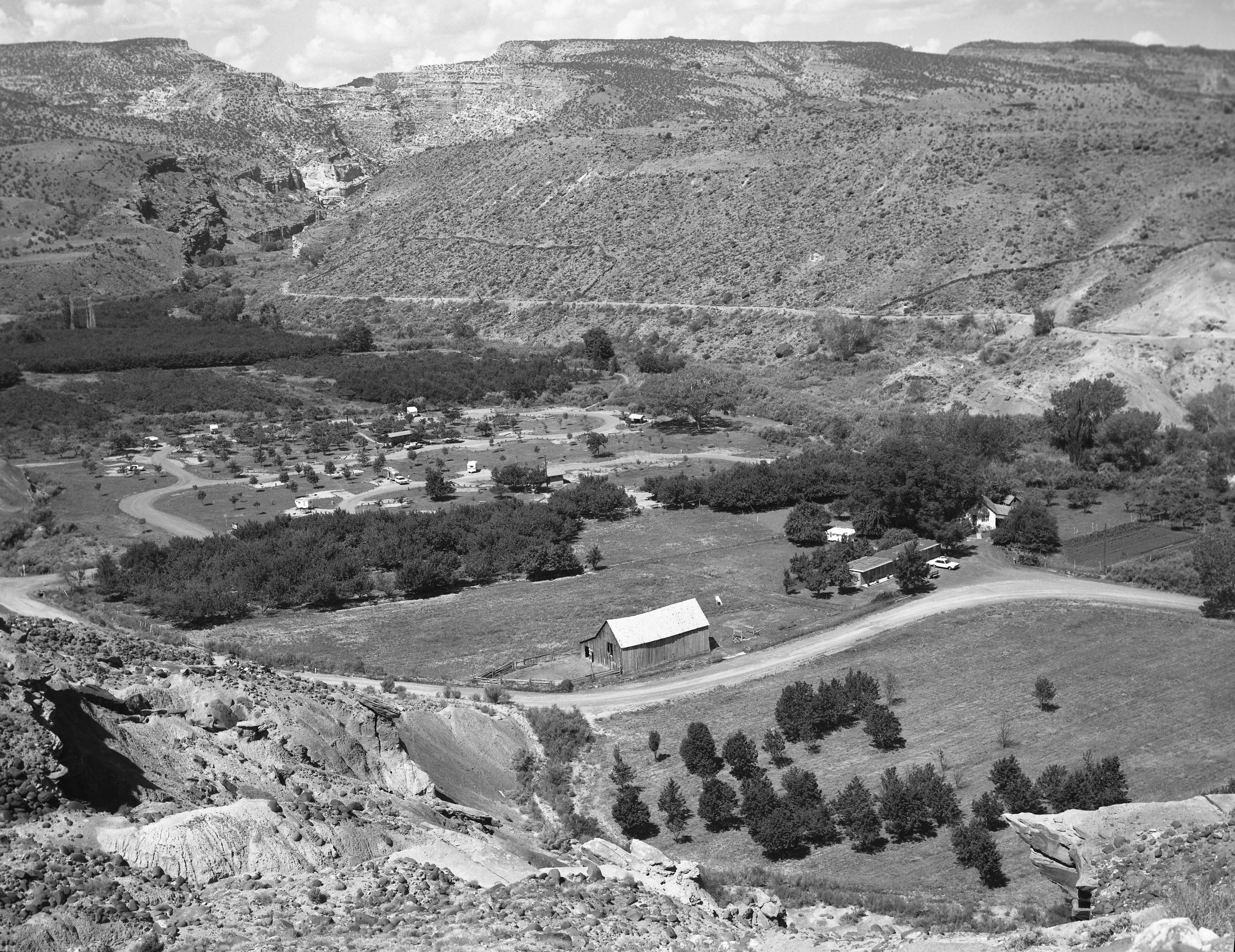
The people of Fruita lived a rhythm tied closely to the land. Apple, pear, peach, and cherry trees were planted along the riverbanks, supported by carefully engineered irrigation ditches. Small fields were cultivated for grains and vegetables, while livestock grazing took place in nearby pastures.
Education and community life centered around simple, multipurpose buildings. A small schoolhouse served local children, and gatherings were often held in homes or shared spaces. With limited access to outside goods, residents repaired tools, preserved food, and adapted to the constraints of frontier life.
This era is central to Capitol Reef history because it represents one of the last sustained agricultural communities to exist within what would later become a national park. Unlike many western settlements that grew into towns or disappeared entirely, Fruita’s transformation was tied directly to the land being preserved.
By the early 20th century, improved roads slowly brought more travelers into the region. The dramatic rock formations and quiet agricultural valley began attracting attention from explorers, photographers, and early tourism advocates. Local boosters and conservation-minded individuals pushed for federal recognition of the area’s scenic and cultural value.
In 1937, Capitol Reef was designated a national monument. This marked a turning point for Fruita. Over time, residents sold their land to the federal government, and families gradually relocated. When Capitol Reef became a national park in 1971, Fruita’s era as a living settlement officially ended, and its role shifted toward preservation and education.
This transition is a key chapter in Capitol Reef National Park history, illustrating how conservation efforts sometimes transform inhabited landscapes into protected public spaces, preserving both natural and cultural resources for future generations.

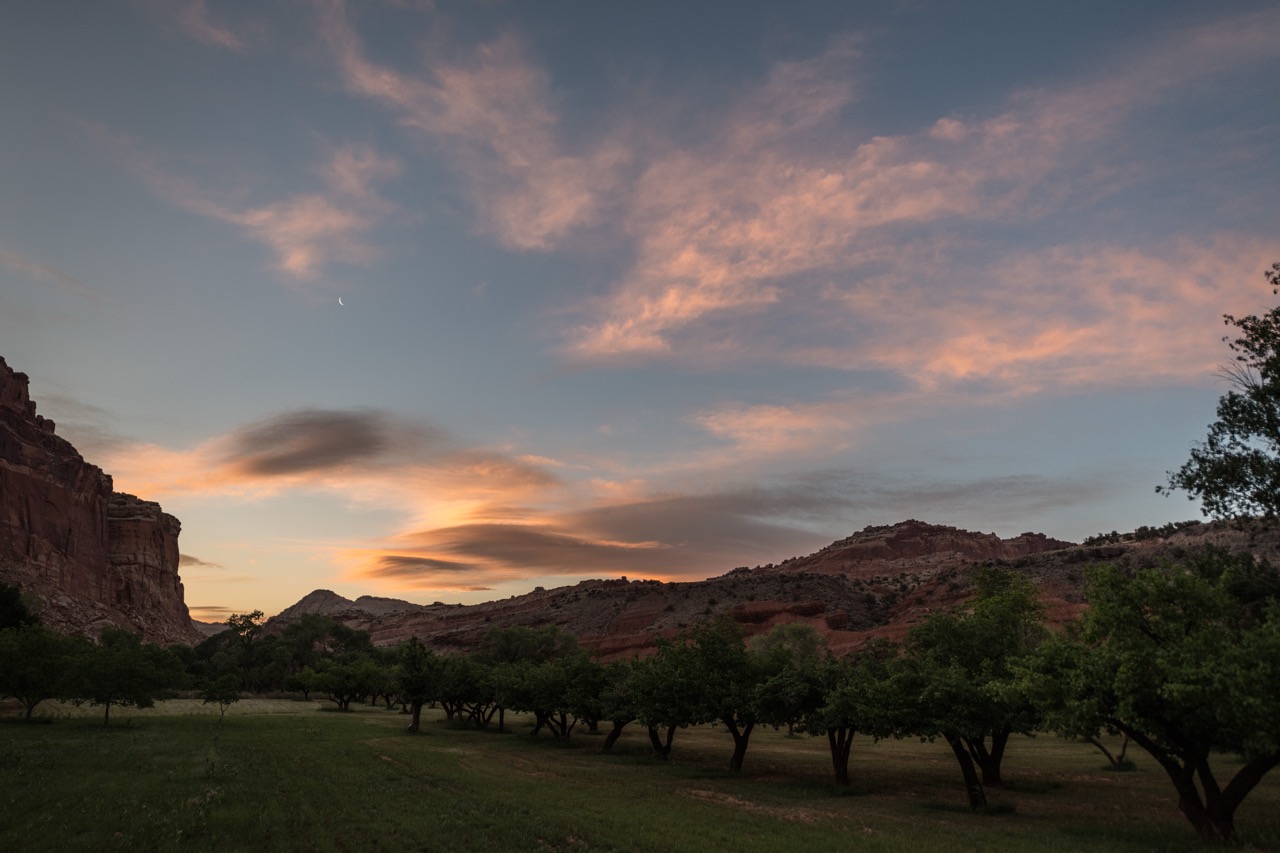
Today, Fruita is preserved as a historic district within Capitol Reef National Park. Visitors can walk among restored orchards, view historic buildings, and experience the landscape much as early settlers did.
One of the most tangible connections to Fruita’s past is the orchard system. Park staff continue to maintain and harvest fruit trees originally planted by residents. During certain seasons, visitors can pick fruit, offering a rare, hands-on way to connect with the area’s agricultural history.
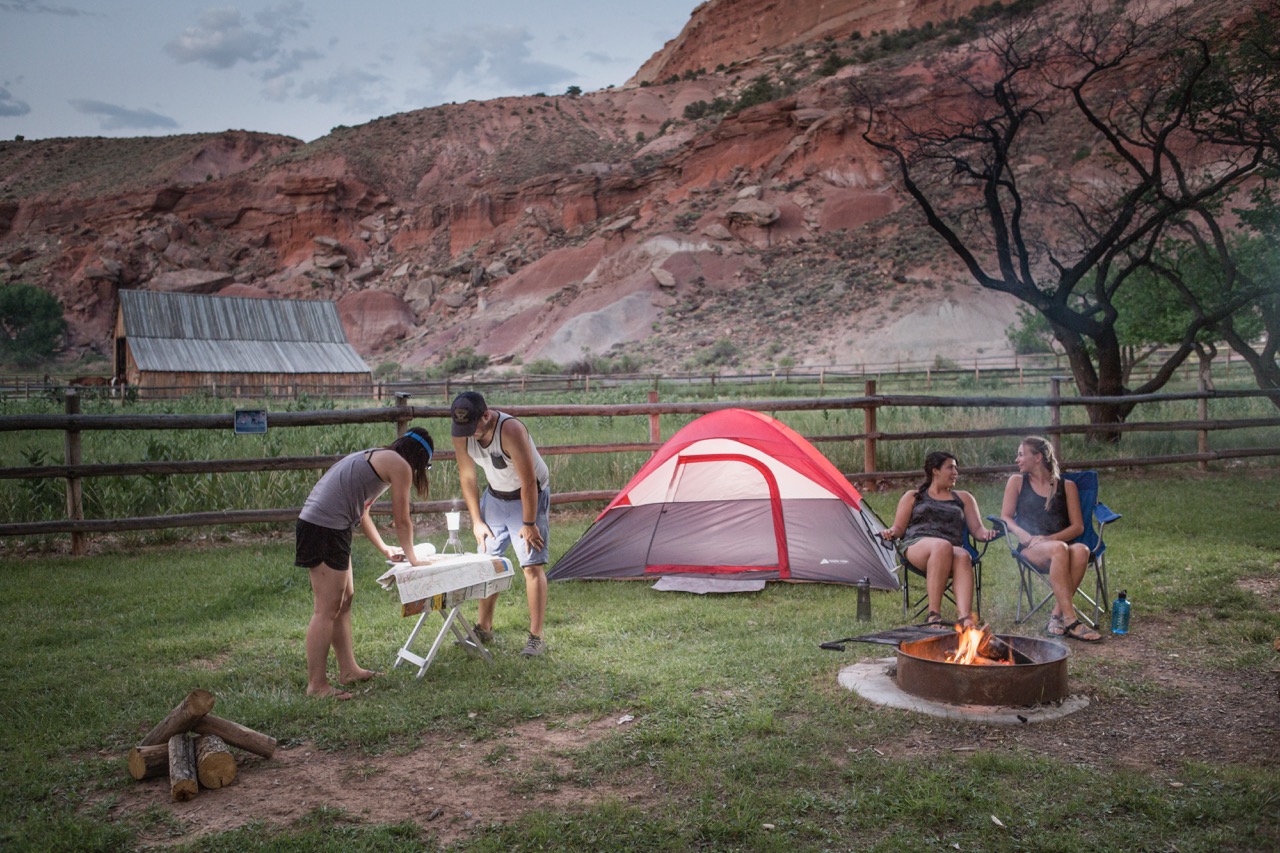
Today, visitors can stay at a campground in Fruita within Capitol Reef National Park. It’s located along the Fremont River in the same fertile valley where early residents once farmed and built their community.
One of the most tangible connections to Fruita’s past is the historic Gifford House, a preserved homestead that once served as a residence and gathering place for families living in the valley. Today, the Gifford House stands as one of the most recognizable reminders of Fruita’s early community life, offering visitors a chance to step inside a space that reflects how people lived in this remote farming settlement.
In addition to its historical significance, the Gifford House is also known for serving fresh-baked fruit pies made using traditional recipes inspired by Fruita’s orchard heritage. The pies are prepared locally by The Broken Spur Inn & Steakhouse in Torrey and delivered fresh daily to the Gifford House for visitors to enjoy. For many travelers, stopping for a pie has become a small but memorable ritual, an easy way to connect modern visits with the area’s agricultural past.
Sampling a pie here isn’t just about food, it’s part of experiencing Fruita as a living landscape, where history, local craft, and present-day travel intersect in a meaningful way.
What was Fruita?
Fruita was a small farming community established in 1880 along the Fremont River, long before Capitol Reef became a national park.
Why did people settle there?
The fertile soil and reliable water source made Fruita one of the few viable agricultural areas in an otherwise arid region.
Is Fruita still inhabited today?
No. Residents gradually relocated after the area became a national monument and later a national park. The community is now preserved as a historic district.
Can visitors still see the original orchards?
Yes. Many orchards planted by early settlers remain, and some are still actively maintained by the National Park Service.
Where is the Fruita area located today?
Fruita is located within Capitol Reef National Park, near the main scenic drive and the Fruita campground area.
Reading about Fruita’s history offers valuable context, but walking through the orchards, seeing the preserved buildings, and experiencing the quiet of this valley firsthand brings the story to life in a way no blog can fully capture. Taking time to explore Fruita during a Capitol Reef visit adds depth to the experience, connecting the park’s dramatic landscapes with the people who once shaped this place through everyday life.
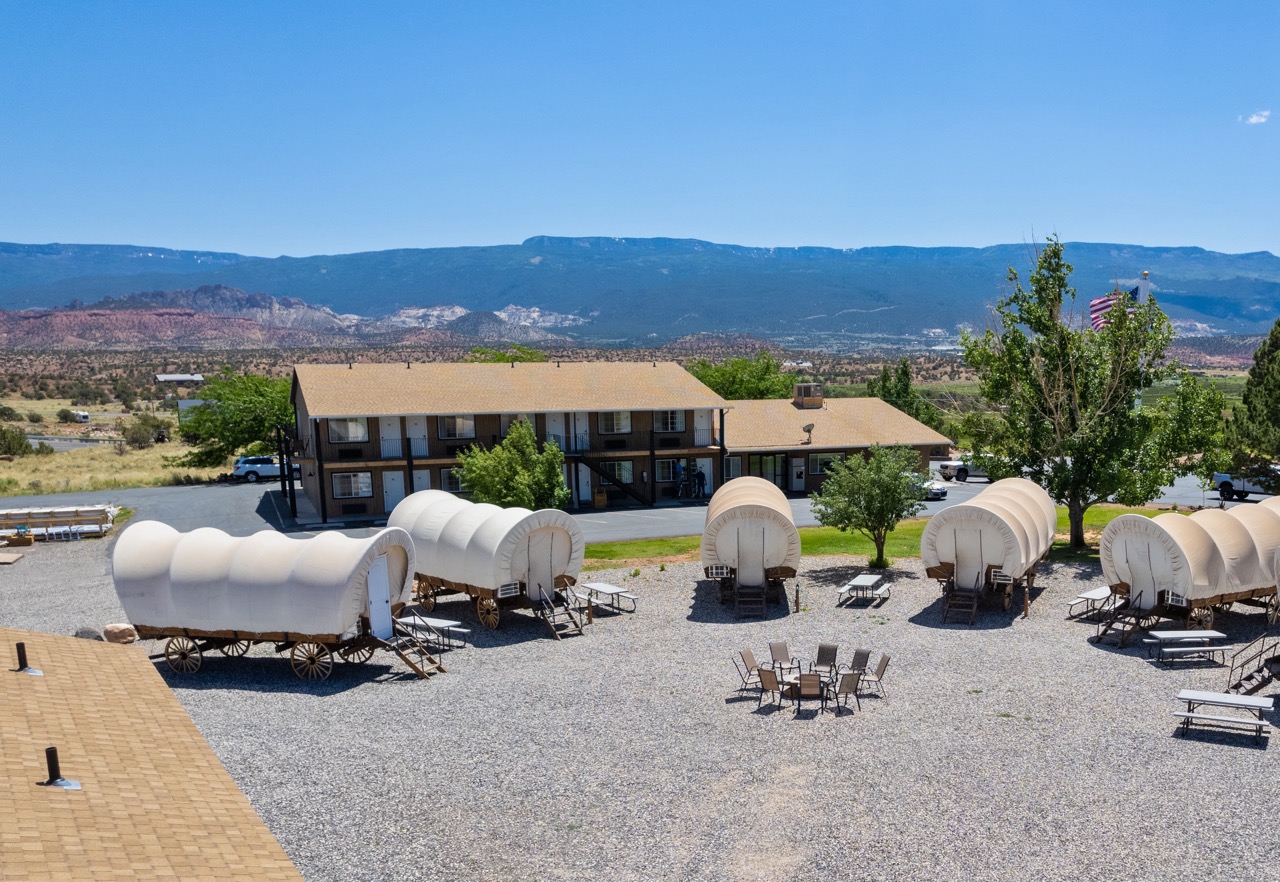
For those planning to explore Fruita and Capitol Reef, staying in Torrey offers a convenient way to spend more time in the park. The Broken Spur Inn & Steakhouse provides a comfortable home base just minutes from Capitol Reef, with both traditional rooms and covered wagon accommodations—a small nod to the area’s frontier history—making it easy to experience Fruita at a relaxed pace.
February 17, 2026