

The Broken Spur Inn is just minutes from the park entrance, with breakfast, an indoor pool, and an on-site steakhouse.
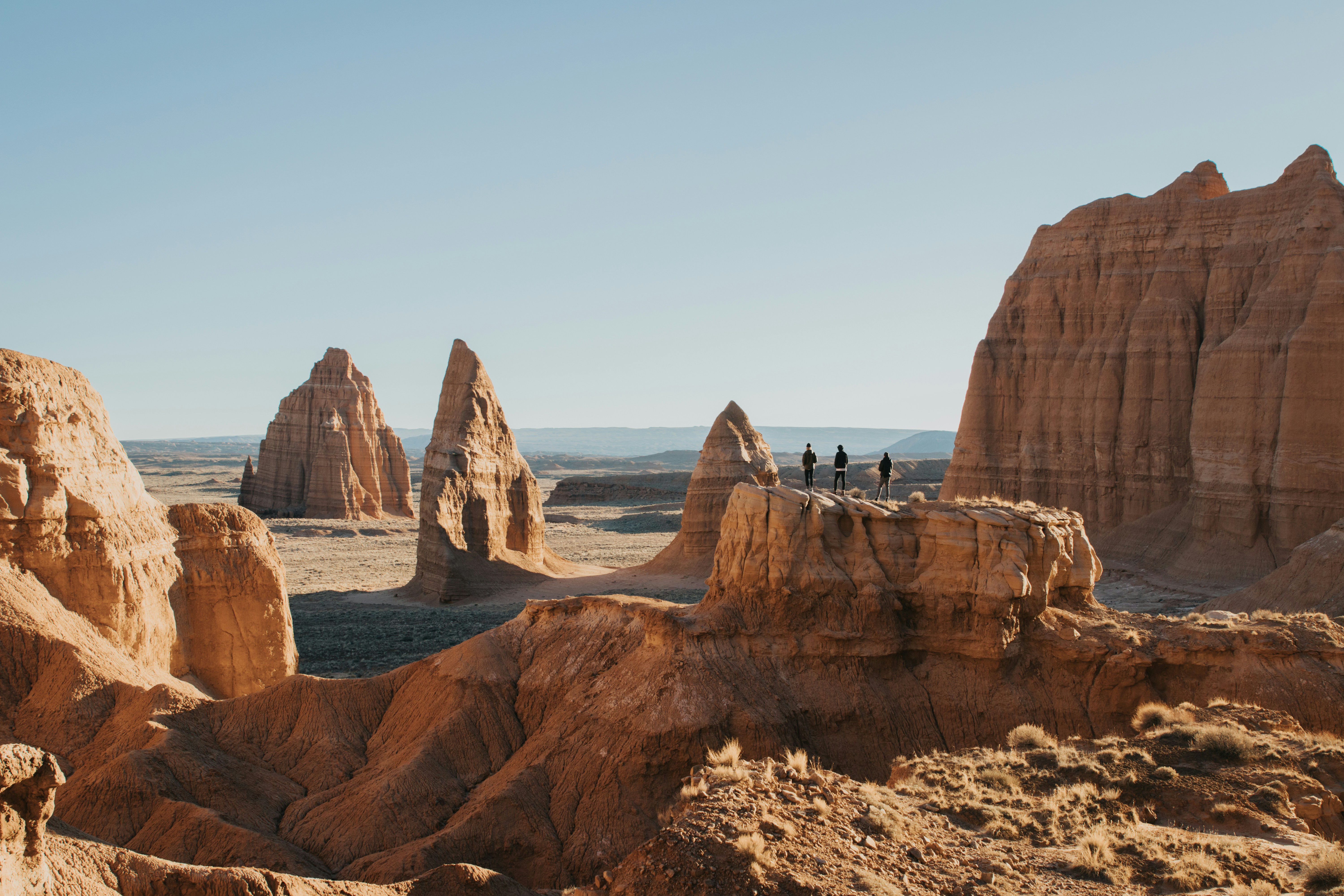
Cathedral Valley offers a very different side of Capitol Reef National Park. It is quieter, more remote, and shaped by the kind of scenery that makes the drive itself part of the experience. For travelers who like wide-open landscapes, unusual rock formations, and a little more adventure built into the day, it is often well worth the effort. Since it does require extra time and a high-clearance vehicle, it is best approached as a full outing rather than a quick add-on.
Best for: scenic backroad drives, geology, photography, solitude, repeat visitors.
Not ideal for: rushed itineraries, standard passenger cars, or travelers who want quick and easy viewpoints.
Vehicle needs: high-clearance vehicle at minimum, with four-wheel drive often recommended depending on conditions.
Time needed: plan for most of a day.
Cathedral Valley Capitol Reef National Park is the park’s remote northern district. It feels very different from the more visited Fruita area near the visitor center. Instead of paved roads and easy pull-offs, Cathedral Valley is known for backcountry roads, broad desert views, bentonite clay hills, and huge sandstone monoliths like the Temples of the Sun and Moon. The area got its name because the rock formations reminded early explorers of cathedral-like shapes.
Yes, for the right traveler. The real appeal is not just one stop. It is the full experience of the drive: the scale, the quiet, the unusual landforms, and the sense that you are seeing one of the less-traveled parts of Capitol Reef. If that sounds appealing, Cathedral Valley is worth it. If you mainly want the easiest classic park sights, stick with the front-country highlights first.
This is the part to take seriously. The National Park Service says vehicles with high ground clearance can usually manage Cathedral Valley roads in dry conditions, even without four-wheel drive. But spring and summer rain, or winter snow, can leave the roads muddy, washed out, or completely impassable, even for high-clearance 4WD vehicles. The park specifically advises checking current conditions before going.
That matters even more around the Bentonite Hills Capitol Reef area. Bentonite clay becomes slick and gummy when wet, which can make both driving and walking difficult or impossible.
A practical takeaway:
Plan to spend most of the day in Cathedral Valley so you can enjoy it without feeling rushed. The drive takes time, the scenery is spread out, and part of what makes this area special is being able to stop, look around, and take it in. It usually works best as its own outing rather than something squeezed into a day already packed with other Capitol Reef stops.
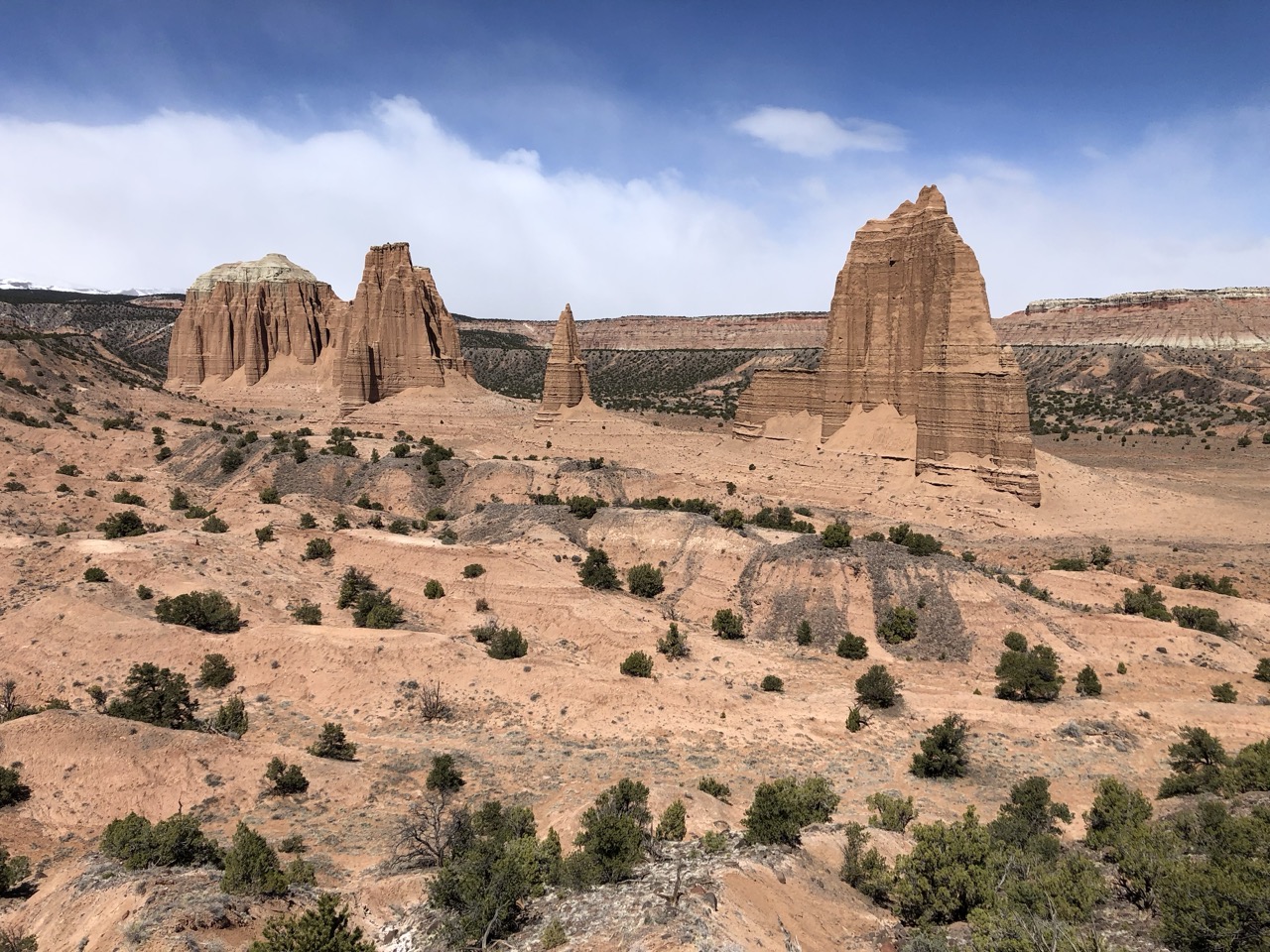
These are the signature landmarks of Cathedral Valley. They are massive freestanding Entrada Sandstone monoliths rising out of the desert floor, and they are a big reason many people make the drive in the first place.
Bentonite Hills
The Bentonite Hills are one of the most unusual landscapes in the area, with soft, banded hills in shades of brown, purple, gray, green, and red. They sit outside the park boundary on BLM land, but they are part of the broader Cathedral Valley experience.
Part of what makes the Cathedral Valley drive worthwhile is that it is not just about one landmark. Upper and Lower Cathedral Valley include broad desert views, sculpted formations, and named features like the Walls of Jericho and South Desert overlooks.

The best time to visit Cathedral Valley is when roads are dry. Spring and fall are often the safest bets for temperatures, but current conditions matter more than the month on the calendar. NPS warns that rain and snow can quickly make the roads muddy, washed out, or impassable.

If Cathedral Valley is on your list, Torrey is one of the easiest and most convenient places to stay. Being close to Capitol Reef makes early starts simpler, gives you more flexibility if weather or road conditions shift, and lets you spend more time in the park and less time driving to it. The Broken Spur Inn & Steakhouse is an especially good fit for that kind of trip. It is about five minutes from the entrance of the park, includes a complimentary hot breakfast to help you get out the door, and gives you an easy place to come back to after a long day exploring, with dinner at the Steakhouse and a comfortable stay already waiting.
Not always in dry conditions, but NPS says high clearance is usually necessary and four-wheel drive is often recommended depending on conditions.
Yes. They are the signature formations in Cathedral Valley and one of the main reasons people make the drive.
Yes. Capitol Reef says road conditions are updated as they change, and visitors can check alerts or call the park’s recorded road line at 435-425-3791.
April 30, 2026